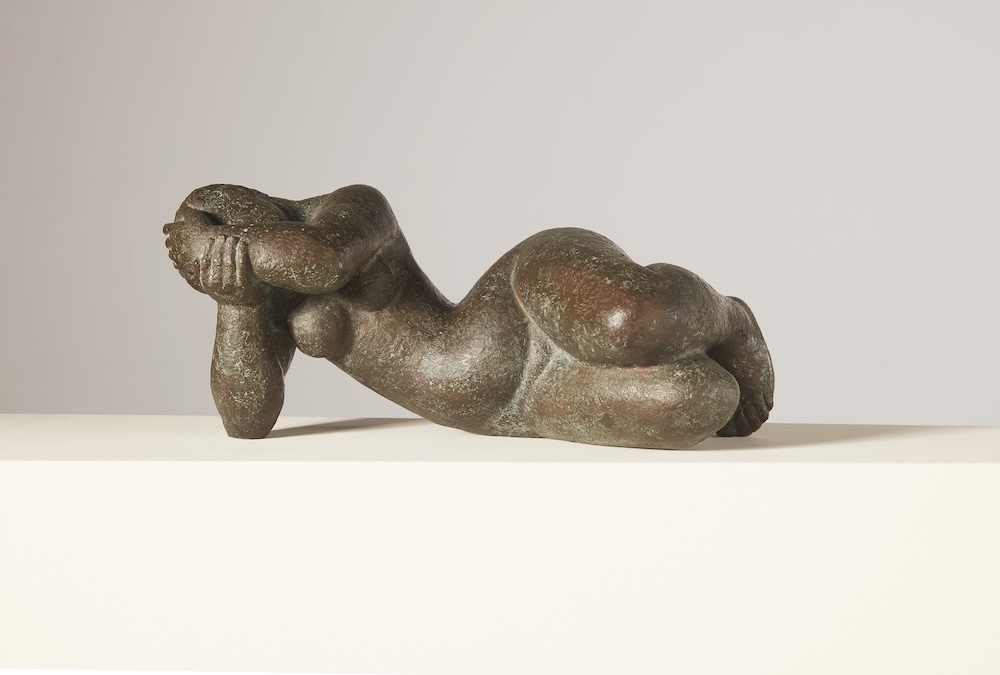
Provenance: Galerie de France, Paris (1978) • Collection P. Roef • Mediated by Kunsthandel M.L. de Boer, Amsterdam • Collection P. de Swaan and N. de Jong, Amsterdam • Collection prof.drs. V. Halberstadt en M. Trebukova, Amsterdam (since 1990)


send me the price
We offer personal viewings and worldwide art shipping.
Alfred Manessier (1911–1993) was a French painter and one of the most important representatives of abstract art in the 20th century. He is known for his colorful and lyrical abstract compositions, often inspired by religious themes, light, and nature.
Manessier was born in Saint-Ouen near Abbeville, in northern France. He grew up in a Catholic environment, which later had a significant influence on his work. He initially studied architecture at the École des Beaux-Arts in Paris, but after the death of his father, he quickly turned his focus to painting. During his studies, Manessier became interested in the art movements of his time, such as Cubism and Surrealism.
In the 1930s, Manessier developed his own style, influenced by early modernists but also by his deep spiritual convictions. After a retreat in a Trappist monastery in the 1940s, the religious dimension of his work grew stronger. His works are abstract but with a strong focus on color, light, and harmony. He was influenced by stained glass art and also created stained glass windows for churches, including those in the Chapelle du Saint-Sacrement in Brittany and in Metz.
During his lifetime, Manessier received numerous awards, including the Grand Prize at the Venice Biennale in 1962. His work was exhibited in prestigious museums and galleries around the world. He was one of the leading figures of the École de Paris, the movement that revitalized abstract art in France after World War II. Manessier died in 1993 in a car accident near Orléans, France.