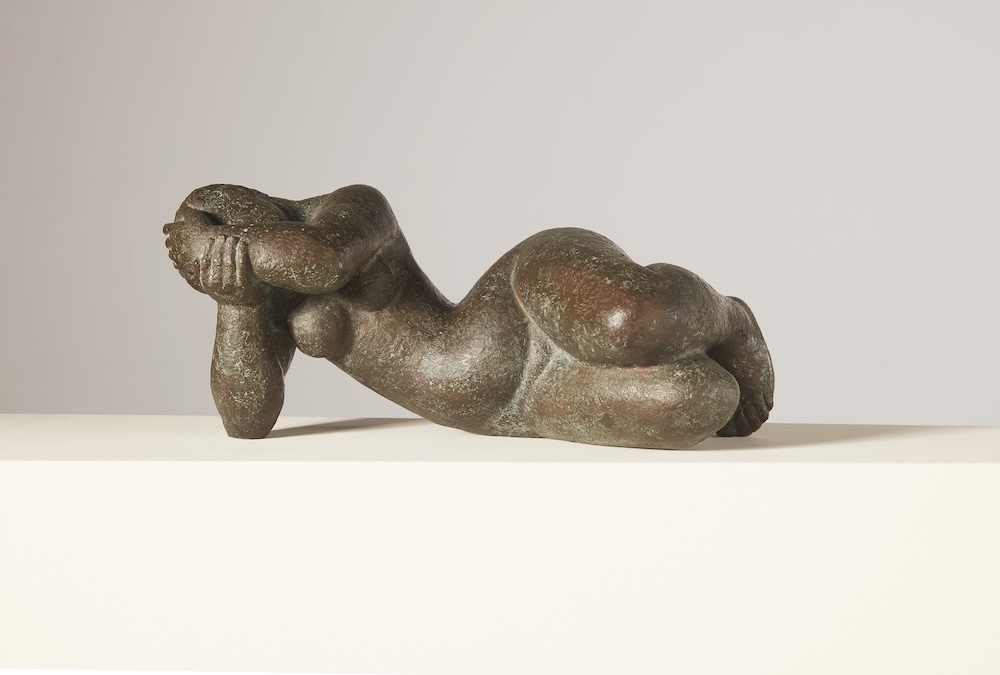
Provenance: Galleri Edeling, Copenhagen (1987) • Private collection, Denmark
Exhibition: Solo-show Robert Jacobsen at Galleri Edeling, Copenhagen (1987-88)
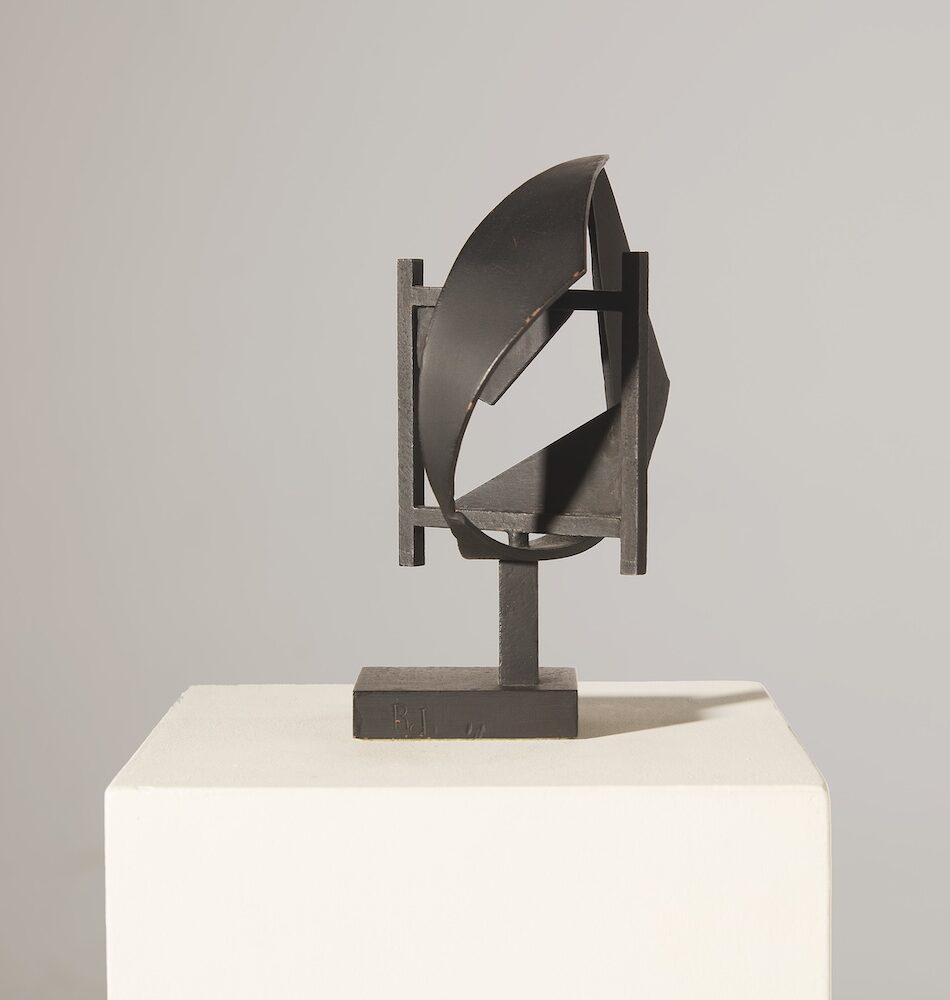
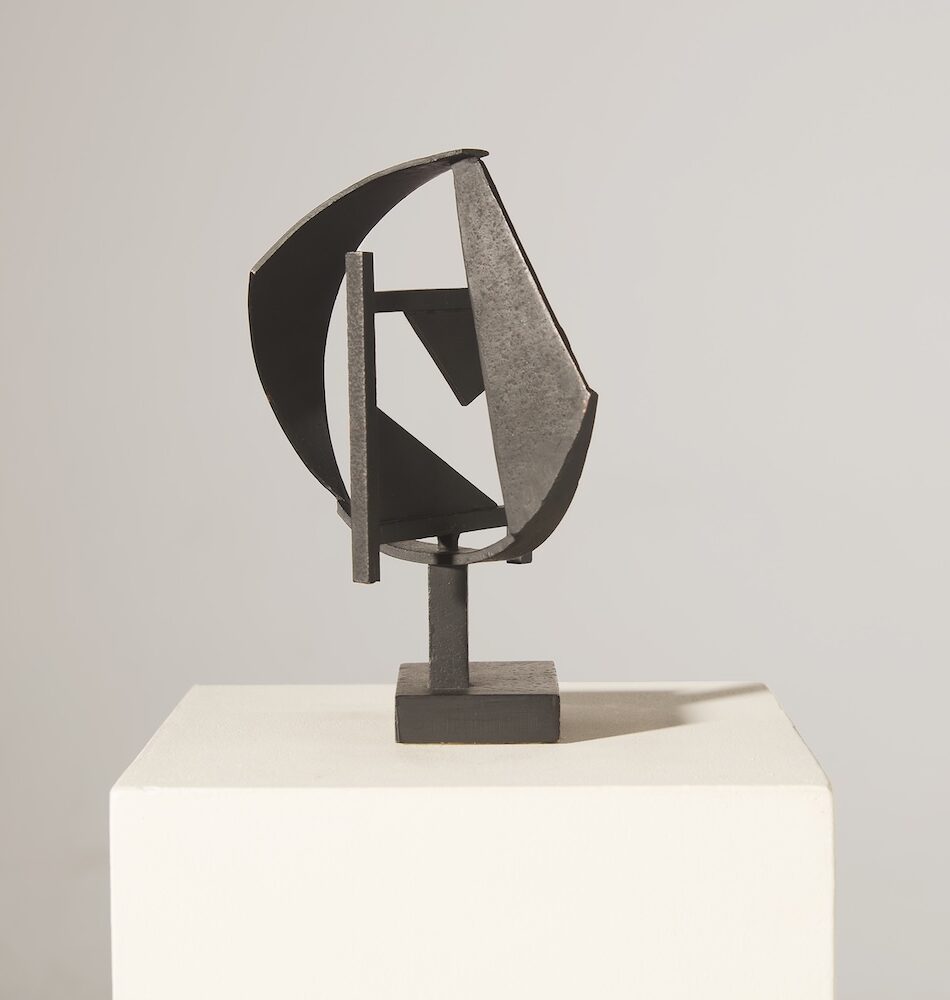
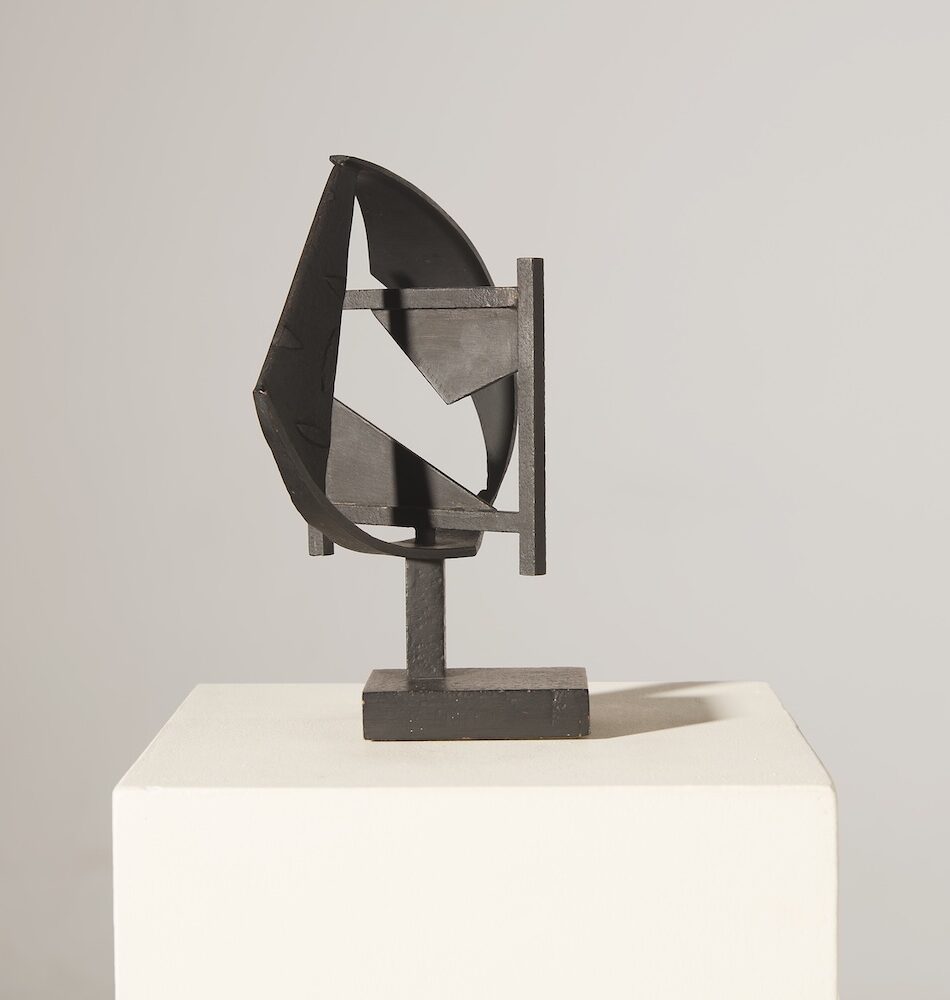
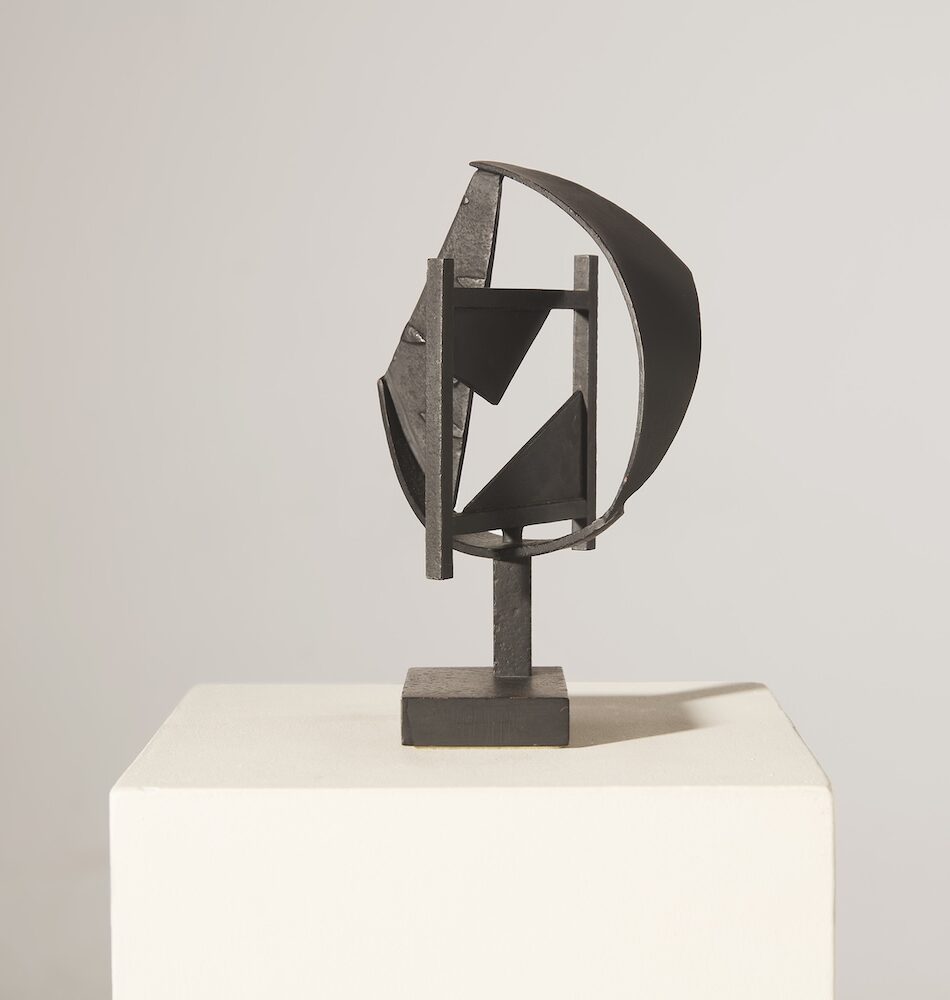
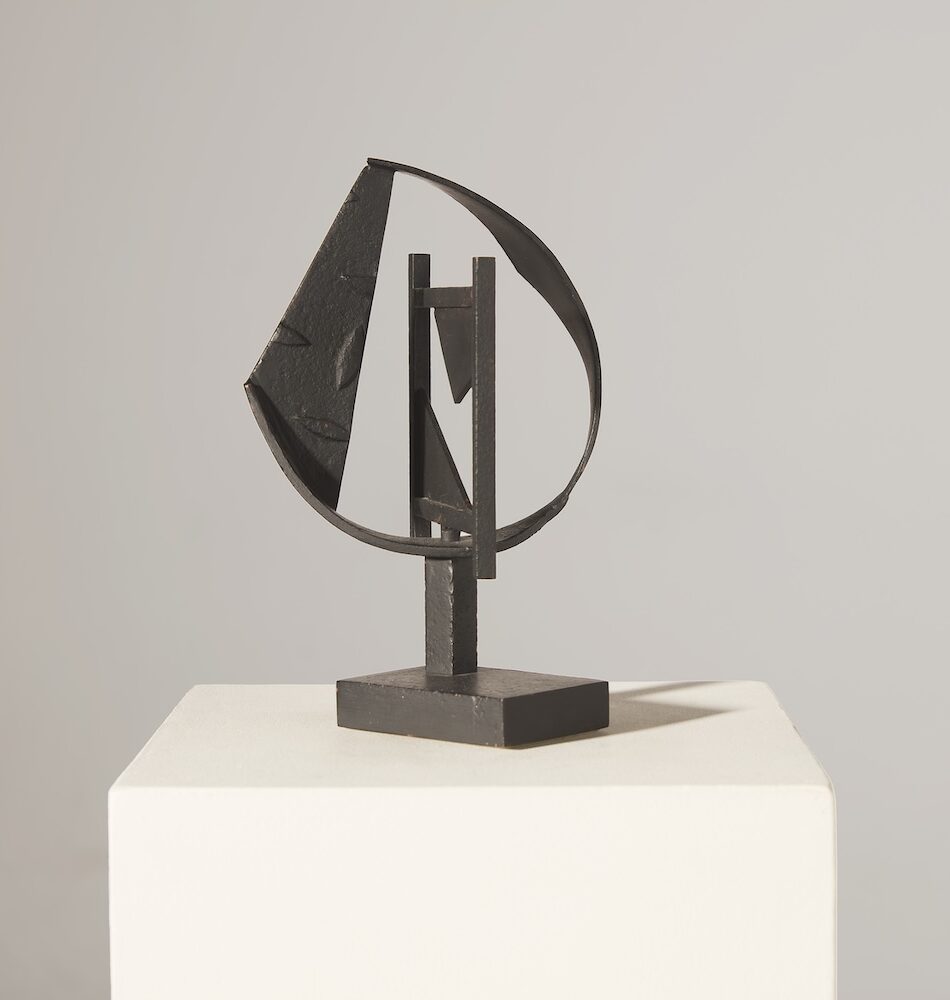
send me the price
We offer personal viewings and worldwide art shipping.
Robert Julius Tommy Jacobsen (1912-1993) was born in Copenhagen, Denmark. He is regarded as one of Denmark’s most important modern sculptors, celebrated for pioneering abstract and concrete sculpture. Jacobsen was largely self-taught, initially working with wood and stone and drawing inspiration from folk art and non-Western objects. His early work reflected fantastical, organic forms, while the 1930s and 1940s saw him become part of Denmark’s avant-garde scene.
In 1947, Jacobsen moved to Paris, marking a pivotal turning point in his career. There he developed his signature welded iron sculptures and embraced concrete art, guided by Denise René, a leading Parisian gallerist who encouraged him to explore abstraction. His works from this period were non-figurative, exploring space, rhythm, balance, and the interaction between the viewer and the sculpture. He emphasized that the viewer’s perspective, movement, and engagement are integral to the experience, challenging traditional ideas of a single “correct” viewpoint.
Jacobsen was a passionate jazz listener, especially enjoying Duke Ellington. He often listened to jazz while working, and the music influenced the rhythm, flow, and improvisational energy of his sculptures. Just as jazz bends, swings, and breaks established patterns, Jacobsen’s forms explore dynamic movement and unexpected spatial relationships, giving his abstract works a lively, musical quality.
The lightness of his sculptures is an important feature. He was inspired by calligraphic signs, and one can clearly sense the effect of light, calligraphic brushwork translated into three-dimensional iron forms. Painted black, the sculptures emphasize contrast and elegance, enhancing their visual rhythm. In this way, Jacobsen challenged earlier abstract sculpture, which often appeared heavier and more clumsy. This approach helped define concrete sculpture, a branch of abstract art inspired by Constructivism, which focuses on formal qualities, space, and the viewer’s perception rather than narrative or emotion.
After two decades in France, Jacobsen returned to Denmark in 1969 and continued producing monumental public works. He also had a significant academic career, serving as professor of sculpture at the Academy of Fine Arts in Munich (1962-1982) and the Royal Danish Academy of Fine Arts in Copenhagen (1976-1983). His sculptures are represented in major museums worldwide and in public spaces across Denmark and Europe, including collaborative landscape sculptures like the Tørskind Gravel Pit.
Jacobsen received numerous honors, including the Thorvaldsen Medal (1967), the Prince Eugen Medal (1974), and the French Ordre des Arts et des Lettres (1987). Today, he is celebrated not only for his mastery of metal but also for redefining sculpture as an interactive, spatial, and rhythmic experience, where viewer and artwork engage in a dynamic dialogue.