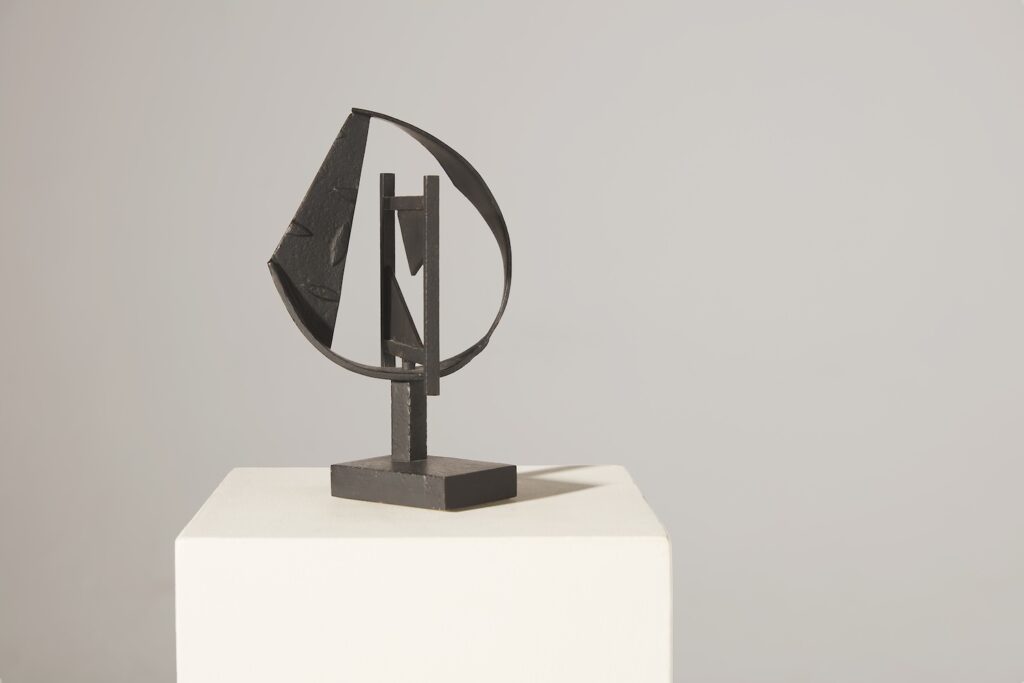
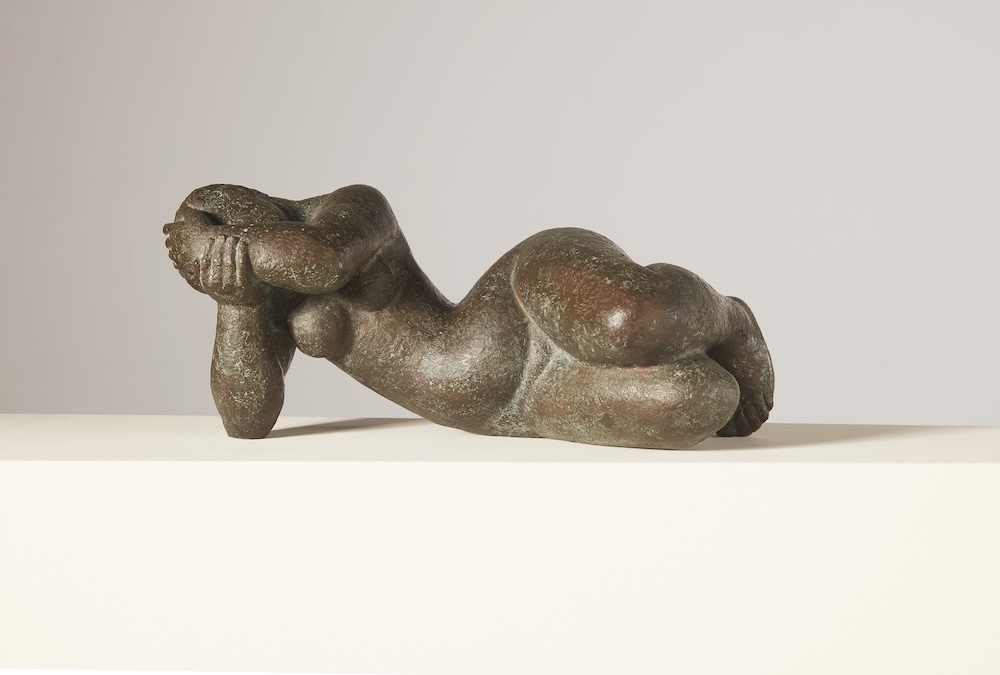
Provenance: Distinguished private collection, Sweden (including works by Wesselman, Christo, and Fontana) • Uppsala Auktionskammare, Stockholm, ‘Important Sale’ within the Modern and Contemporary Sale, 9 Nov. 2021, lot 12 • Private collection, Netherlands
Literature: André Stufkens e.a., Shinkichi Tajiri. Snelheid, Erotiek en Geweld, cat. tent. Museum Het Valkhof, Nijmegen 2003, dl. 1, p. 91 nr. 106, en dl. 2 afb. p. 139
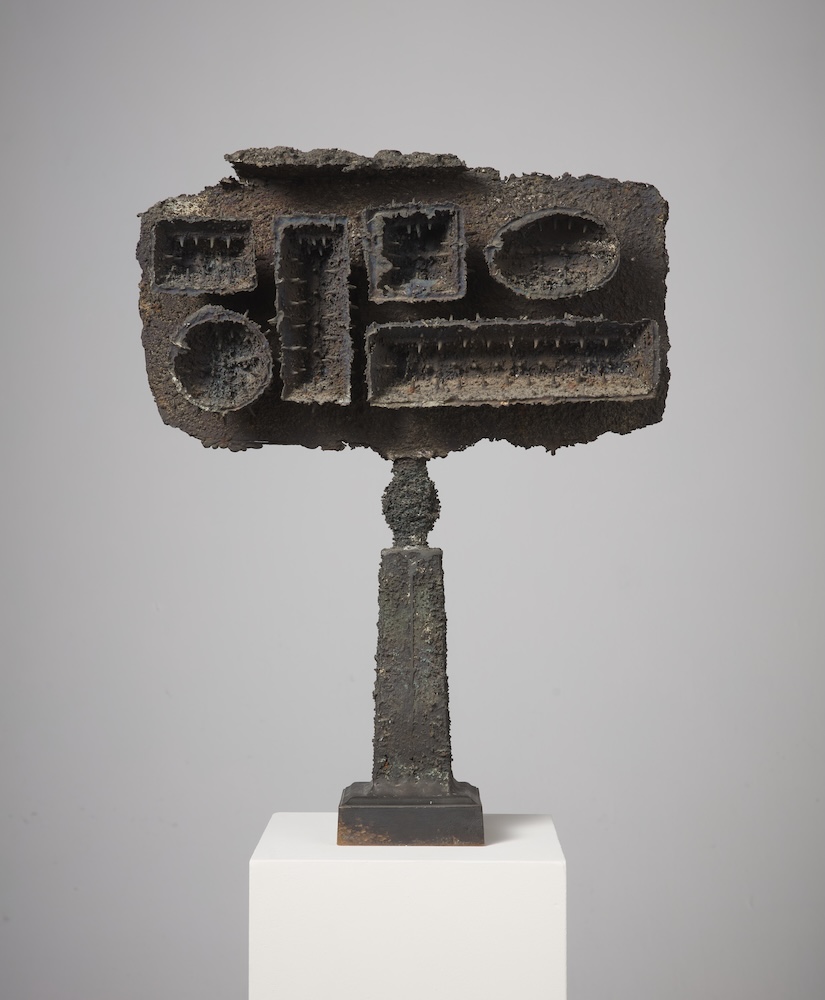
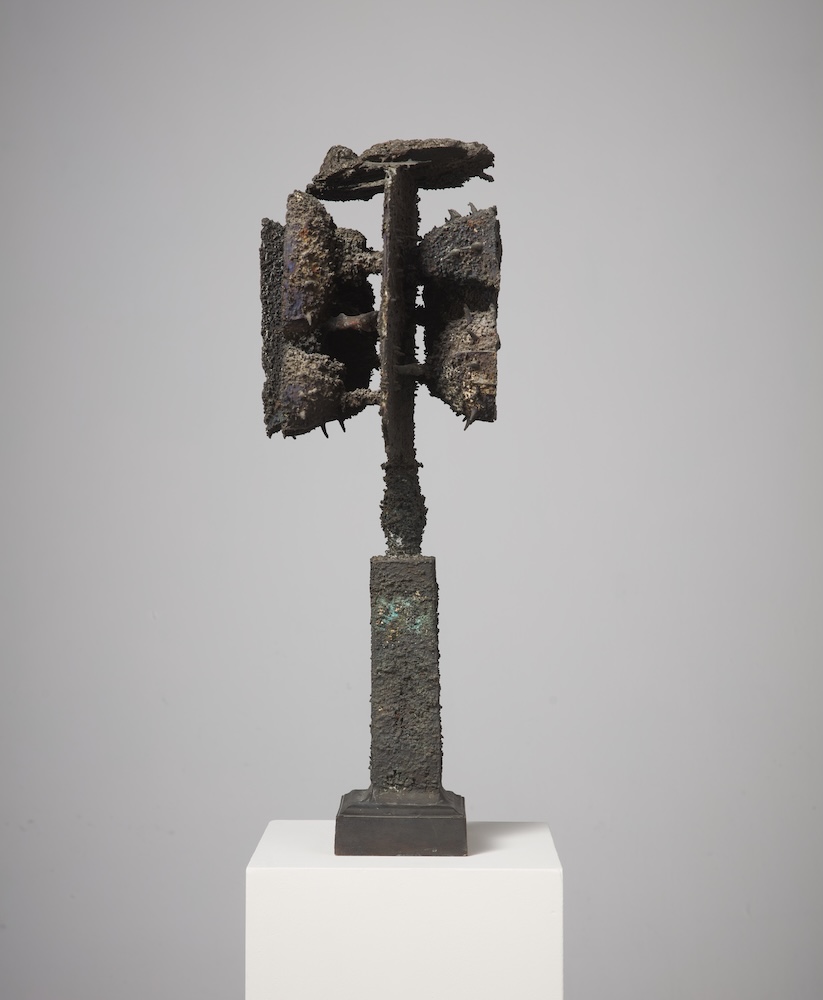
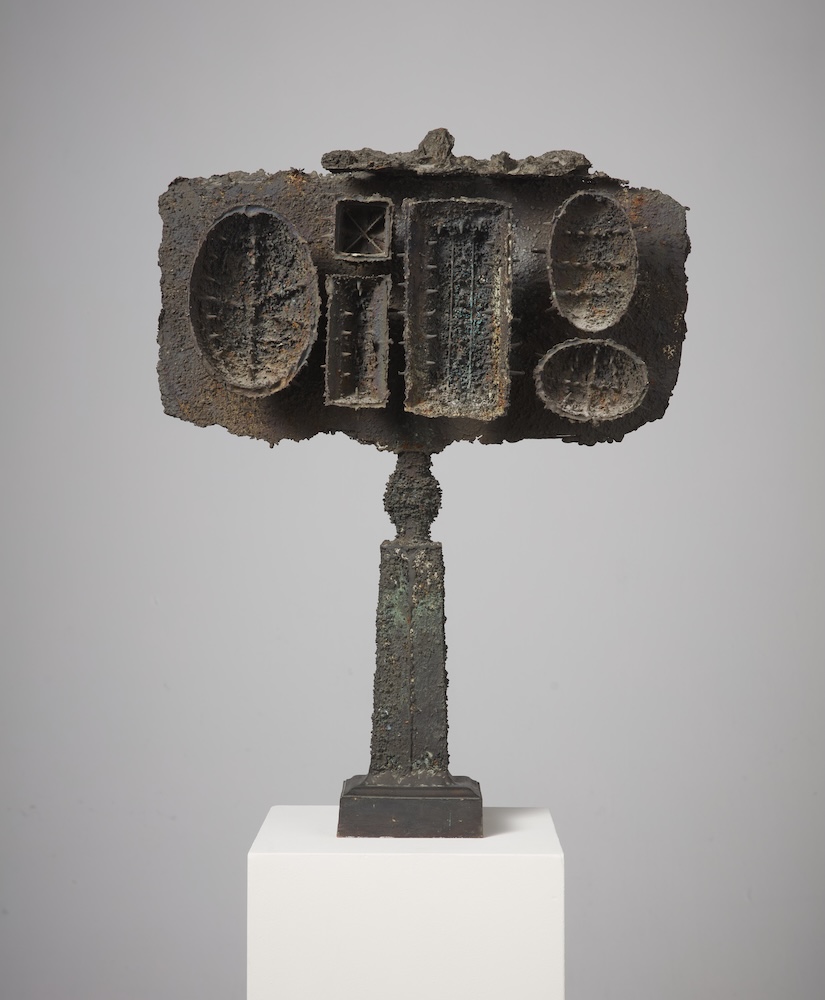
Museums: Museum Kröller-Müller holds a comparable work, Végétation agressive (KM 124.913)

send me the price
We offer personal viewings and worldwide art shipping.
Shinkichi Tajiri (1923–2009) came from a noble lineage dating back to 300 AD. The Tajiri family belonged to the high aristocracy, were landowners, and were protected by the Samurai—the warrior class that would fascinate Shinkichi throughout his life. At the end of the nineteenth century, Japan underwent major changes, which altered the position and status of the Tajiri family. This shift, combined with Japan’s growing militarism, prompted Shinkichi’s father to seek his future in the United States. There, Shinkichi was born as the fifth of seven children. Alongside various jobs, the young Shinkichi received his first artistic training in the US.
In 1941, on his eighteenth birthday, his American life changed dramatically following the Japanese bombing of Pearl Harbor. Out of fear of sabotage, all Japanese Americans were placed in internment camps. By enlisting in the army, Tajiri eventually managed to escape these appalling conditions, though this decision led to long and intensive training and deployment to the Italian front—a experience he barely survived. After his discharge, Tajiri attended art history classes with great interest at the Art Institute of Chicago. However, he did not remain long in a country that had deeply disappointed him. In 1948, supported by a veterans’ scholarship, he made the leap to Paris.
In Paris, Tajiri had a small studio and studied under the renowned sculptor Ossip Zadkine. Some of his early works show an affinity with Zadkine’s style, but after a year Tajiri left him to work under Fernand Léger. This did not result in an intensive apprenticeship, as Tajiri largely worked independently during this period on his now-famous *Warrior* sculptures. These works quickly attracted the attention of the progressive art world, bringing him into contact with figures such as Picasso, Giacometti, Joan Miró, and Marcel Duchamp. Financial hardship persisted, however, forcing him to work primarily with found scrap metal. While chance played a decreasing role over time, his use of iron and everyday objects would remain a constant in his work.
In 1956, Tajiri and his wife moved to Amsterdam to alleviate financial pressures. He was already acquainted with the Cobra artists, having exhibited with them at the Stedelijk Museum in 1949, and again in 1951 at their invitation. Despite this association, Tajiri never fully became part of the primal Cobra movement; his strong sense of aesthetics and need for order set him apart. After eight years of artistic innovation in Paris, he felt at ease in the calm atmosphere of the Netherlands, where his originality could fully flourish. His arrival was of great importance to young sculptors, as the Netherlands had lagged behind the international modern movement. In retrospect, Tajiri—alongside Carel Visser and Wessel Couzijn—can be considered one of the most innovative sculptors in the Netherlands.
This innovation manifested, among other things, in his own “red stone technique,” a bronze-casting method in which Tajiri carved into a special type of stone that was both soft and resistant to high temperatures. The stone’s porosity produced a granular, rough surface. A single sculpture sometimes required as many as 150 bound stones. Between 1957 and 1964, approximately fifty sculptures were created using this technique, centered on themes such as *Column for Meditation*, *Relic from an Ossuary*, *Tower of Babel*, and *Obiit* (“he has died”), all inspired by ancient Japanese religion. Tajiri continued to search for new forms of expression and developed his *Drippings*, in which remnants from bronze casting were welded together. These sculptures focus on growth processes in nature and show an affinity with the action paintings of Jackson Pollock.
Tajiri’s settlement in the Netherlands marked a highly productive artistic period and his national and international breakthrough. This came through major Dutch museums, the Venice Biennale, international surveys, and important exhibitions in the United States, Japan, and across Europe. His success enabled him to acquire a larger studio—his own castle in Baarlo. The vast space available there signaled the beginning of a new phase, dominated by monumental sculptures. This phase began with the *Seeds* series and later evolved into machine sculptures: works mounted on one or more tall, slender pillars. These machines were still a kind of warrior, but now based on contemporary weaponry or even science fiction—robots, machine guns, airplanes, cameras.
Through the machine sculptures, Tajiri became interested in race car exhaust systems. The twisting, gleaming pipes inspired his *Knots* series, consisting of multiple tubes intricately intertwined. While the machines leaned toward Pop Art, the knots are more closely related to Minimal Art. Initially, they symbolized eroticism for Tajiri—entwined lovers or bondage—but later they came to express a more sober and subtle (Japanese) sense of simplicity.
After the death of his wife in 1969, Tajiri slowed his sculptural production and began experimenting with a wide range of techniques, including daguerreotype, photography, stereography, film, video, and printmaking. Diverse as these media were, they all bore his unmistakable artistic signature.