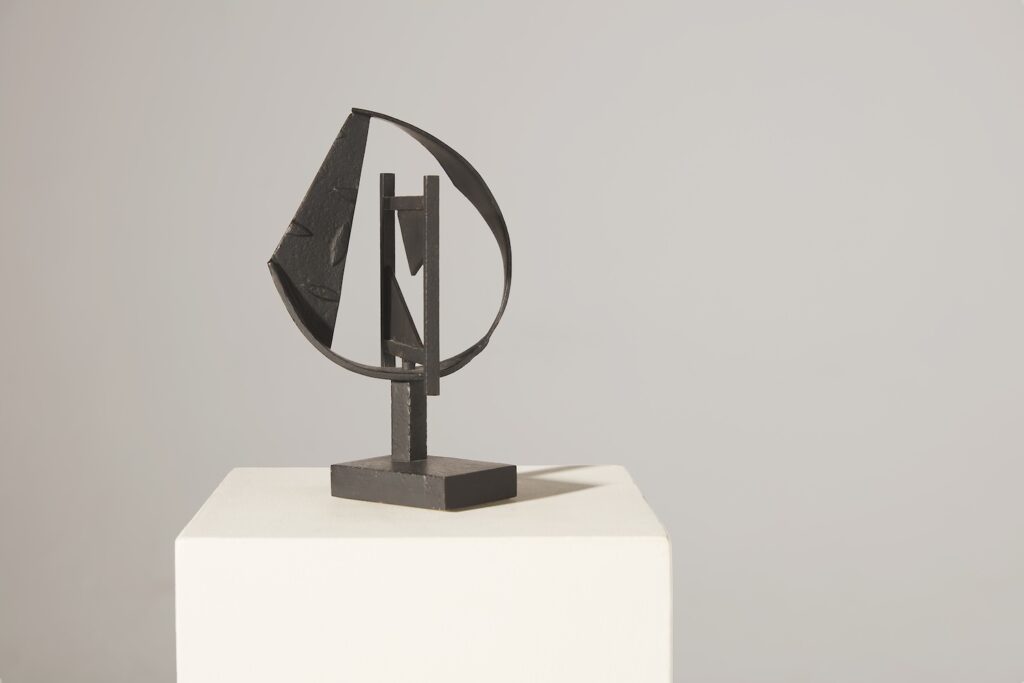
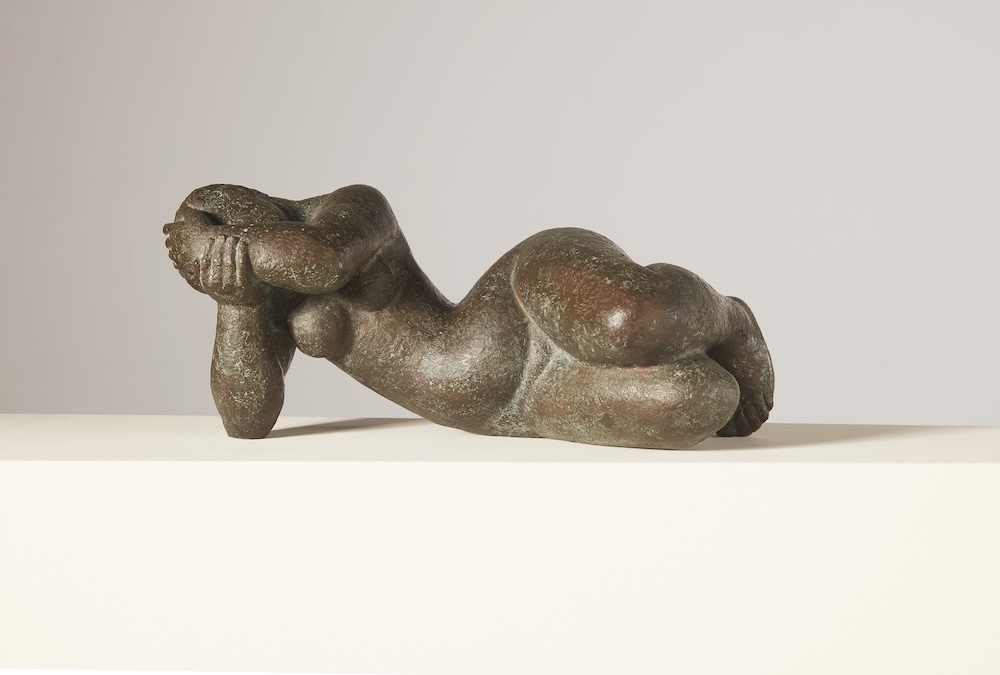
Provenance: Private collection, Switzerland
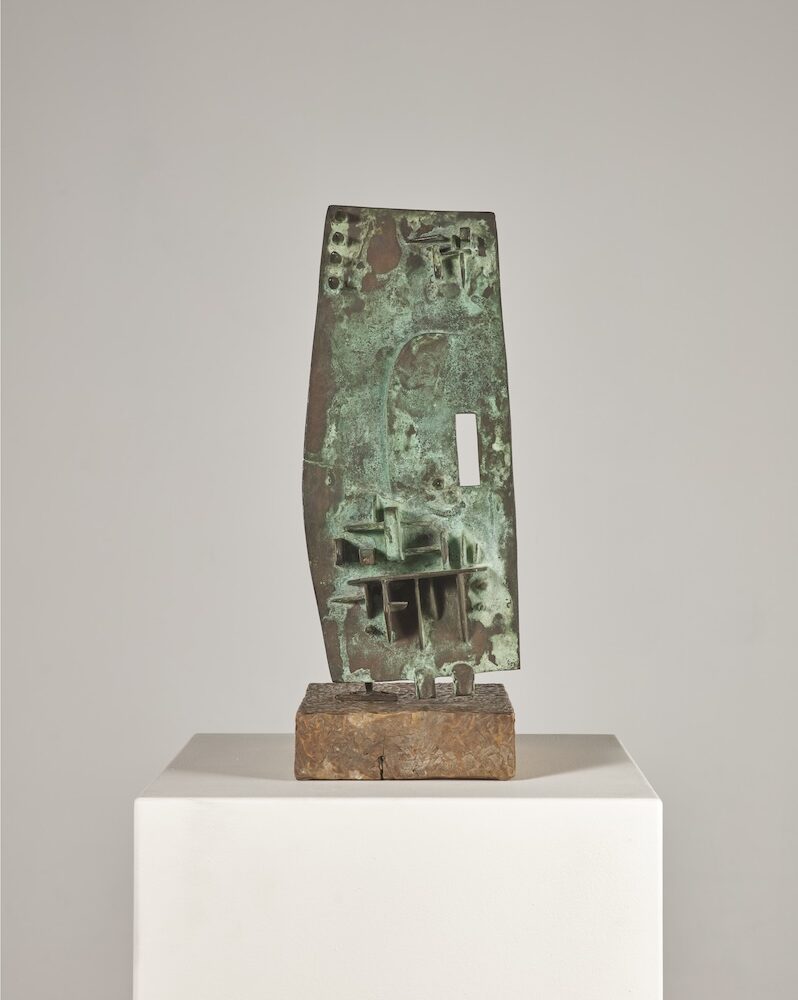
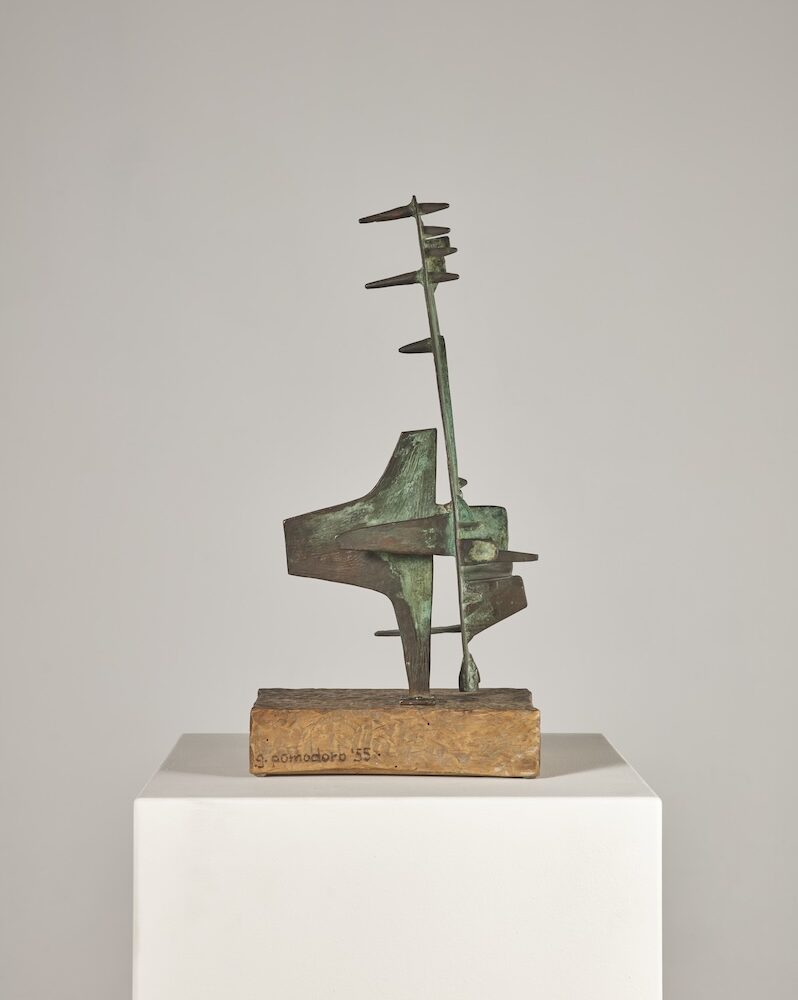
send me the price
We offer personal viewings and worldwide art shipping.
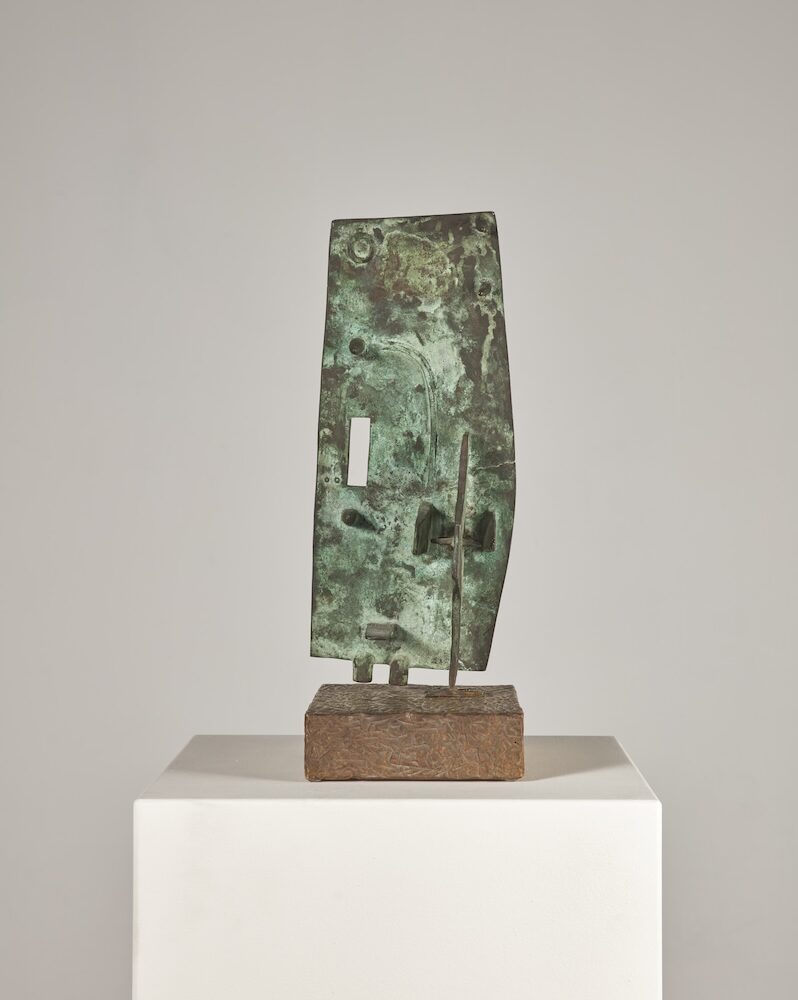
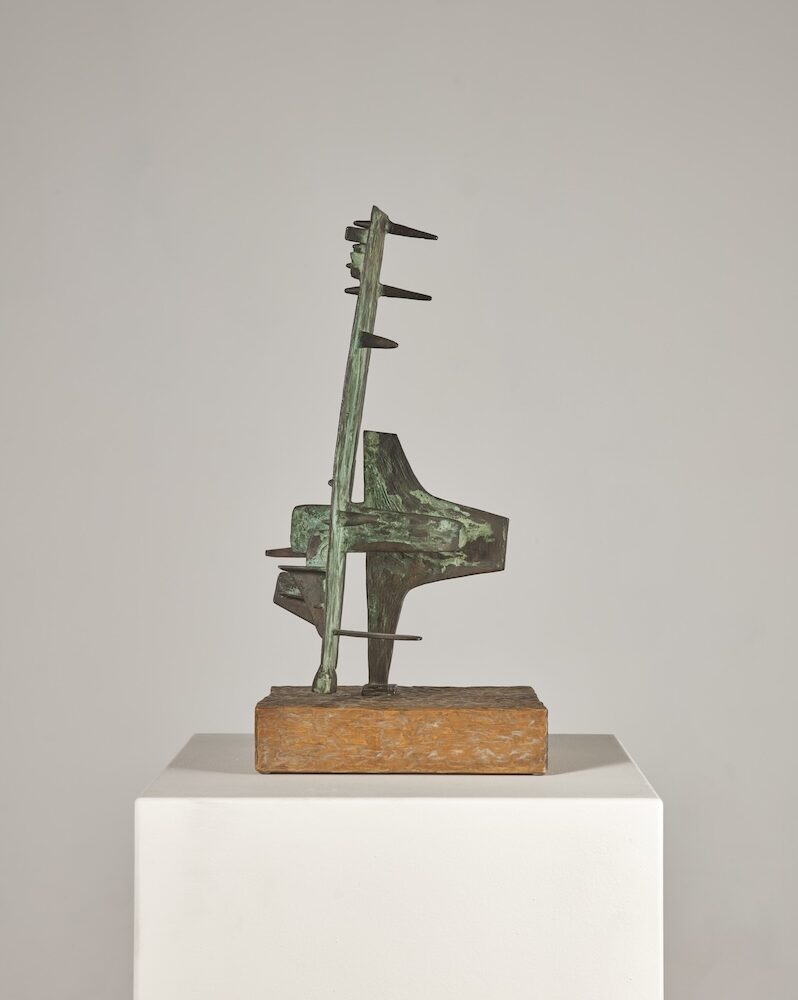
Giò Pomodoro (1930–2002) was one of the most important Italian sculptors of the postwar period, known for his rigorous exploration of form, tension, and geometry across sculpture, drawing, jewelry, and stage design. Born in Orciano di Pesaro in the Marche region, he trained as a surveyor before turning fully to art. After early experiences in Florence, where he immersed himself in museums and avant-garde circles, he settled in Milan in the mid-1950s, at the center of Italy’s most vibrant artistic scene.
From the outset, Pomodoro developed a highly intellectual approach to sculpture. After initial “informel” experiments, he moved toward a rational and structural investigation of form, creating reverse reliefs, surfaces under tension, and works based on opposing forces, rhythm, and balance. During the late 1950s and 1960s he gained international recognition, exhibiting at the Venice Biennale, Documenta in Kassel, and major galleries and museums across Europe and the United States. His work from this period introduced key series such as Fluidità contrapposta, Tensioni, Radiali, and Quadrati, which explored the relationship between space, structure, and energy.
From the 1970s onward, Pomodoro increasingly focused on large-scale public sculpture, working primarily in stone, marble, and bronze. Themes such as the sun, cosmic order, measurement, and collective space became central to his practice. Monumental works like Teatro del Sole, Luogo di Misure, Sole per Galileo Galilei, and Luogo dei Quattro Punti Cardinali transformed public squares and landscapes into symbolic, experiential environments. Alongside sculpture, he maintained a strong practice in drawing, printmaking, jewelry, and scenography for opera.
Throughout his career, Pomodoro received numerous retrospectives, international awards, and public commissions, culminating in the Lifetime Achievement Award in Contemporary Sculpture from the International Sculpture Center in 2002, making him the first Italian artist to receive this honour. He died later that year in Milan, leaving behind a legacy deeply tied to the idea of sculpture as a meeting point between art, architecture, science, and civic life.
A key figure in his artistic context was his brother, Arnaldo Pomodoro, one of the most internationally renowned Italian sculptors of the 20th century. While the two shared early experiences and exhibitions, their paths diverged stylistically: Arnaldo became famous for fractured, machine-like bronze forms with hidden interiors, whereas Giò pursued a more architectural, cosmic, and symbolic language rooted in geometry, tension, and natural forces. Together, the Pomodoro brothers represent two complementary yet distinct visions of modern Italian sculpture, both central to its global recognition.