Provenance: Art dealer M.L. de Boer, Amsterdam • Collection prof.drs. Victor Halberstadt en Masha Trebukova, Amsterdam
Literature: R. van der Linden, R. van Put, ‘Theresia van der Pant, Beeldhouwster/Sculptress.’, Amsterdam 1989, p. 56 • Floris van der Pant, Joost Bergman, Lien Heyting, ‘Theresia van der Pant’, The Haque 2026, pp. 4,101, no. 111, Illustrated
Exhibition: Art dealer M.L. de Boer Amsterdam: Theresia van der Pant, beelden en tekeningen, 1980 • Museum Beelden aan Zee, The Hague: ‘Theresia van der Pant’, Jan 16 – May 3 2026
Was for sale / Sold
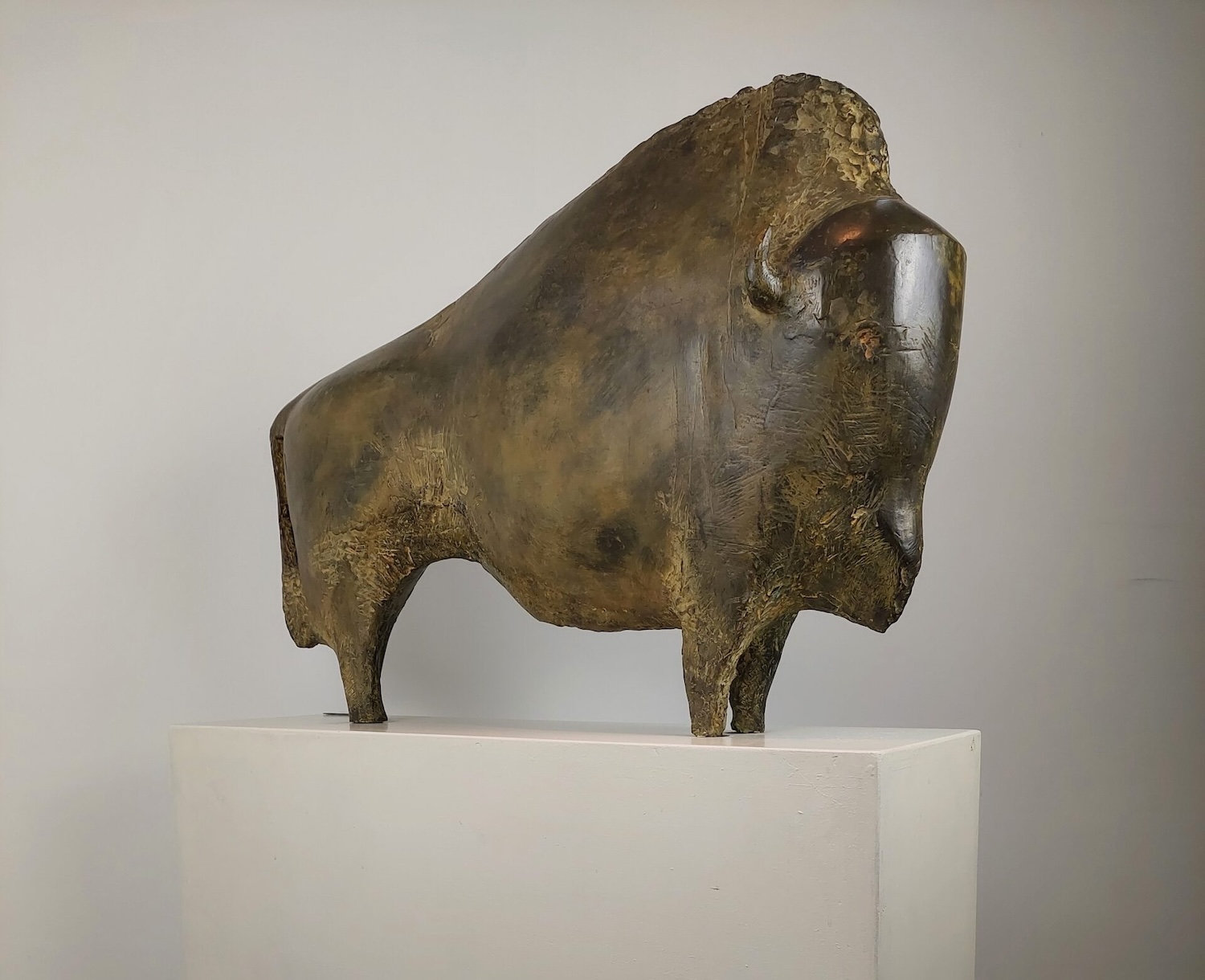
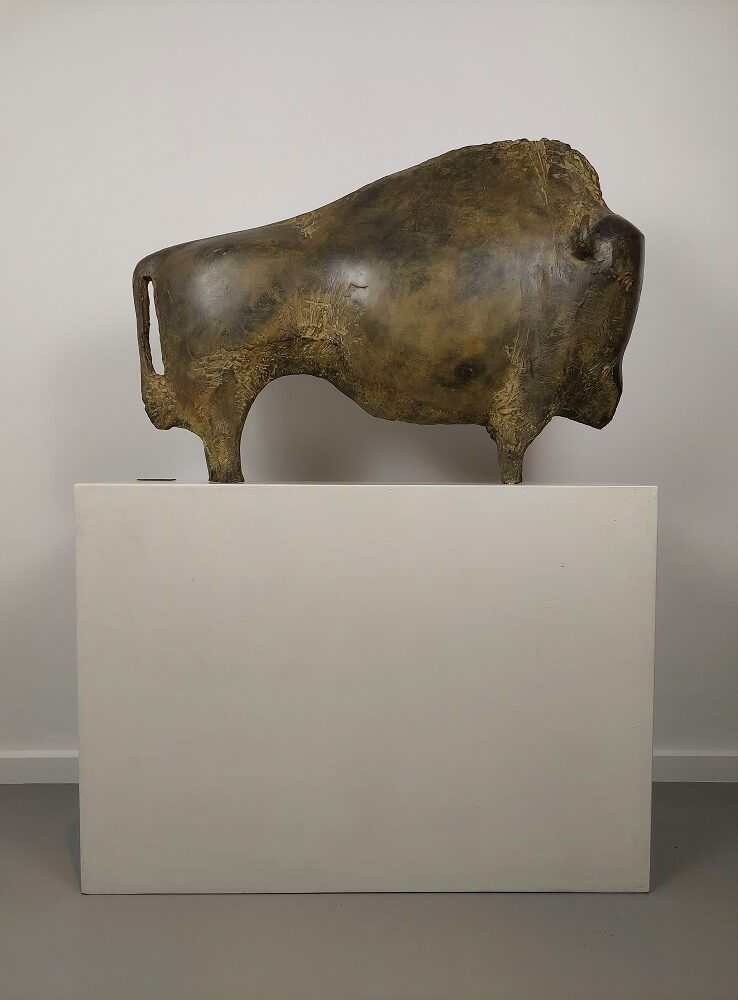
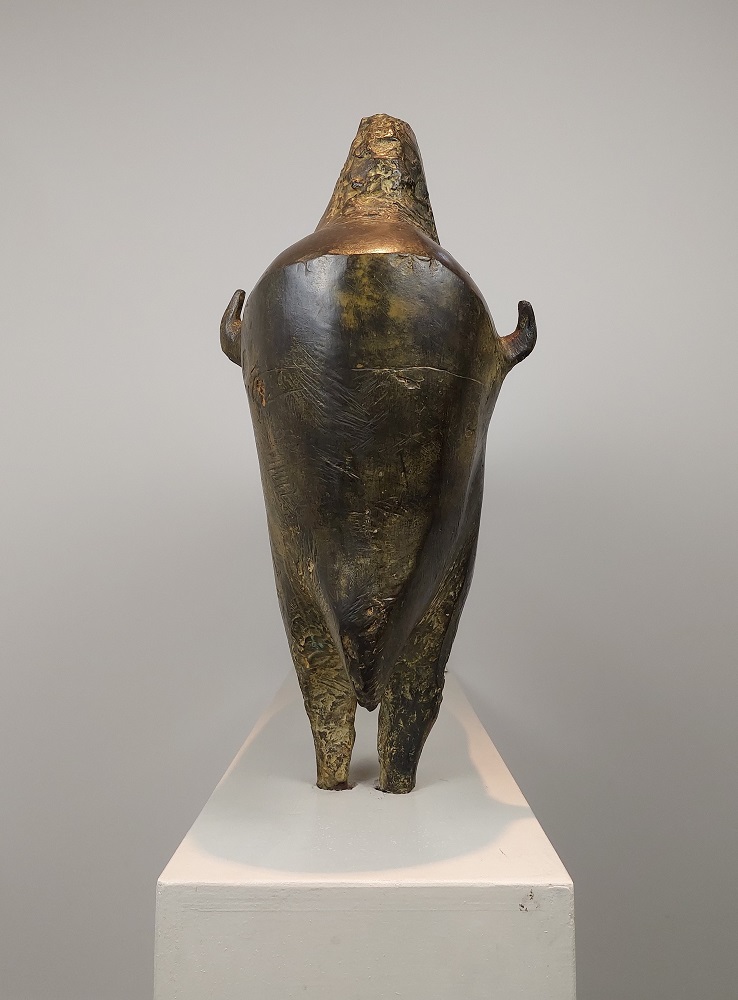
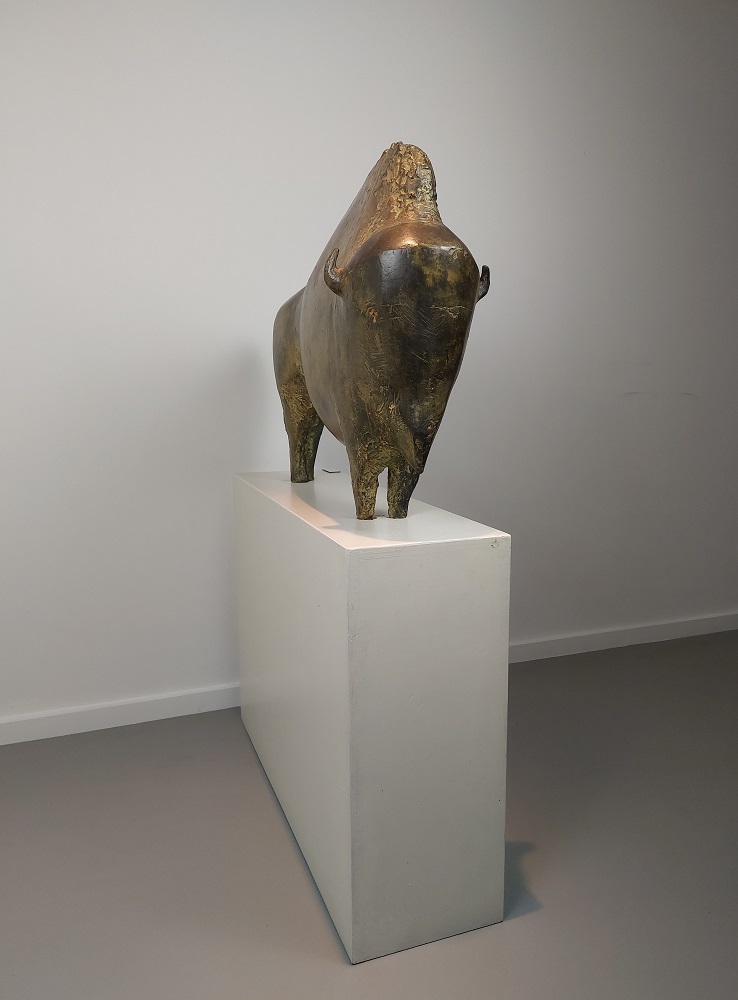
About: In 1975, the bison found its way into the studio of Theresia van der Pant (1924–2013). This came about through an encounter with the animal during a winter stroll through Artis Zoo. “He was rust-brown, and as he breathed in the freezing cold, enormous clouds of steam poured from his nostrils. He stood completely still and made such an impression on me that, in my imagination, he grew larger and larger. I then made a sculpture of a bison, and another, and eventually it grew into herds of small bison. I was intrigued by that colossal body on those slender legs. And the remarkable thing is: seen from the side, it is one solid mass of power with that high back and strong head, but seen from behind, the body is actually very delicate. Plastically speaking, that gave me many possibilities. I made one bison in bronze, the others in terracotta because the color of bronze did not convey the right effect.”
Over the course of more than ten years, Van der Pant produced sixteen bison sculptures. Nature, as usual, provided her with a familiar point of departure for the first versions: sound anatomical proportions, the rendering of horns and tail, and roughened areas to suggest the shaggy coat. Van der Pant approached the bison as a “carver,” focusing on the overall form and the treatment of the skin. The contours remained taut, while the surface was animated by alternating smooth areas with relief. In the patination, she further emphasized this contrast with color. Over time, Van der Pant made the heavy head, high shoulder hump, and mottled coat increasingly robust in relation to the thin and bare hindquarters. The front legs almost completely disappeared into the low-hanging fur. In a reclining bison, the ever-shortening legs were no longer visible at all.
Finally, Van der Pant experimented with the animal’s context. Bison move through the landscape in herds, and she gave form to this idea by placing sculptures together—first two, and later a herd of seven.